
Expert panels
The Berghof Foundation Within the MOTRA network, she builds on her experience as a facilitator of spaces for dialogue and conflict transformation, bringing the field of peace and conflict research to the interdisciplinary consortium. She contributes to MOTRA's overarching goals by conducting iterative, annual expert surveys at the regional and national levels.

These expert panels have the following objectives:
- To involve a broad spectrum of actors in the identification of hidden or new radicalization processes
- To incorporate different societal perspectives into the evaluation of these phenomena and the associated challenges.
- To strengthen the practical relevance of the issues pursued in the consortium as well as the conflict sensitivity of data collection perspectives and instruments.
The panels include experts from academia, security authorities, and civil society, with a particular focus on specialists in (socio-)educational prevention work. By incorporating practical perspectives into both the data collection and reflection phases, the Berghof Foundation contributes to linking MOTRA's empirical-analytical and structural project goals. In line with the objective of "discovering new and hidden trends," the surveys employ an open and flexible approach to questioning, allowing respondents to set their own priorities. Furthermore, the survey focuses on the following questions:
- Perspectivity of "radicalization": How do the perspectives of different fields of action dealing with the topic differ with regard to the virulence of different radicalization processes and the associated need for action?
- Reciprocal or co-radicalization: What interactions are evident with regard to different radicalization tendencies? Which dynamics play a role at which levels?
- Gender aspects: To what extent are gender specifics evident in current radicalization events? Are changes discernible in this regard? To what extent does the topic of "gender" play a role in different radicalization phenomena?
- Online and offline processes: How do virtual and real-world dimensions interact in radicalization processes, e.g., in the approach to extremist scenes?
In cyclical data collection, the same experts participate multiple times over the course of the project. This allows, firstly, the inclusion of findings from previous survey cycles. Secondly, changes can be observed over a longer period.
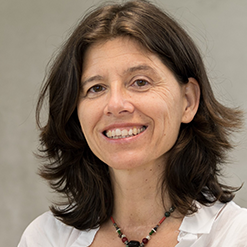
Michaela Glaser
Research assistant at Berghof Foundation Operations GmbH
Email: m.glaser@berghof-foundation.org